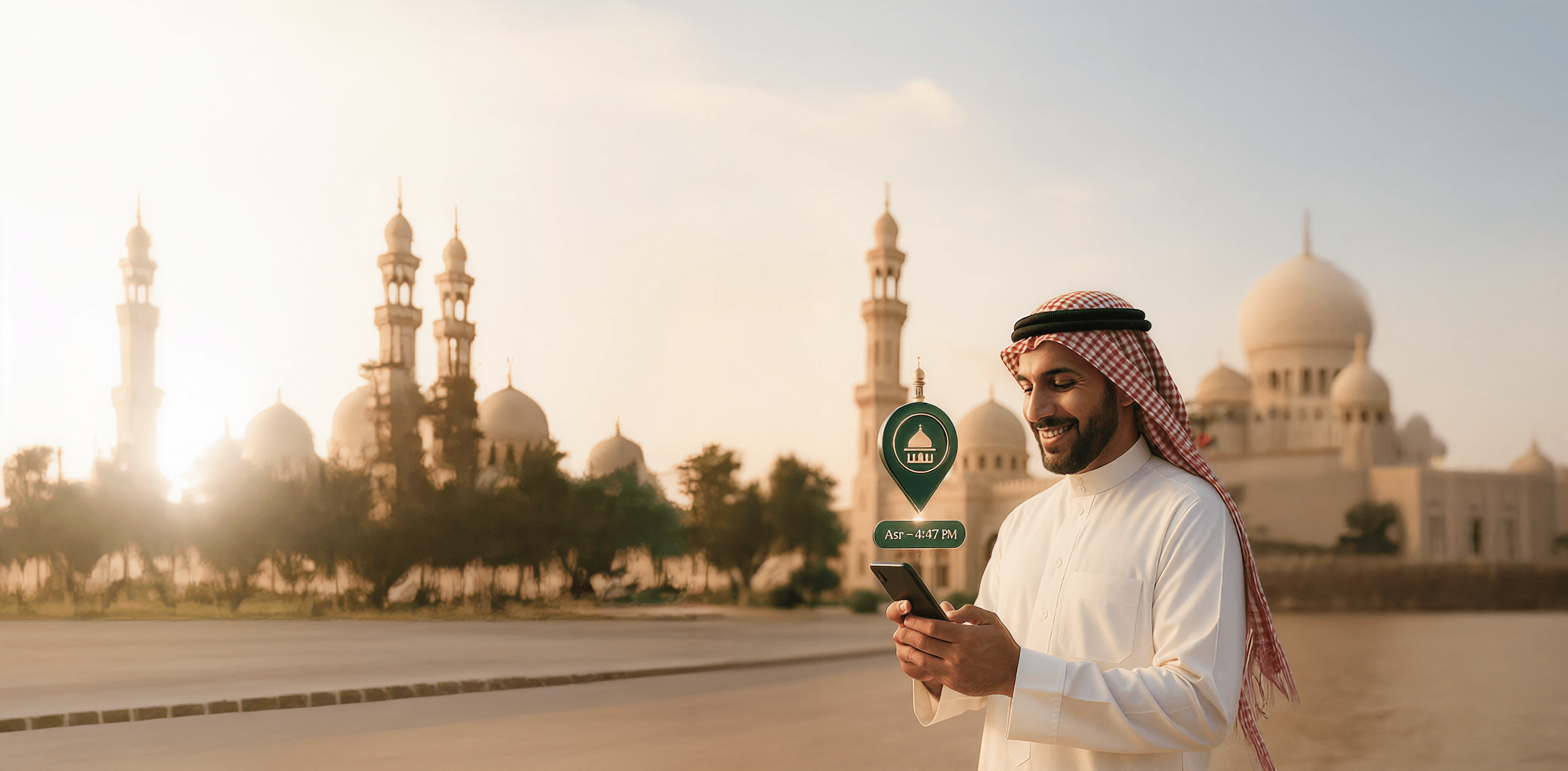


What does masjid mean?
Masjid (مسجد, pronounced MAS-jid, plural masājid) is the Arabic word for a mosque. It literally means “place of prostration”, from the Arabic root s-j-d, to prostrate, the same root as sajdah, the part of the prayer when the forehead touches the ground.
The English word “mosque” comes from the same Arabic word, by way of Spanish (mezquita) and French (mosquée). The word stays close to the Arabic in many languages: مسجد in Urdu and Persian, मस्जिद in Hindi, মসজিদ in Bengali, and masjid in Malay and Indonesian.
The Prophet Muhammad ﷺ said that the whole earth was made a masjid for Muslims, meaning prayer can be offered in any clean place (Sahih al-Bukhari 335). A masjid is the place set aside for that prayer and for the community around it.
Masjid, mosque, musalla and jama masjid: what's the difference?
- Masjid and mosque
- The same thing. Masjid is the Arabic word and mosque is the English one.
- Jama masjid
- A congregational masjid, usually a town's main one, where the Friday Jumma prayer is held.
- Musalla
- A prayer space, such as a room at an airport or office, that isn't a dedicated masjid.
- Eidgah
- An open ground used for the Eid prayers, common in South Asia.
What happens at a masjid?
The main purpose of a masjid is prayer in congregation. The Prophet ﷺ said that praying in congregation is 27 times better than praying alone (Sahih al-Bukhari 645), and also that the most beloved places to Allah are the masjids (Sahih Muslim 671).
 The five daily prayers: Fajr, Zuhr, Asr, Maghrib and Isha, each announced by the azan and led by the imam at the jamaat time.
- Jumma, the Friday congregational prayer with a sermon (khutbah).
- Taraweeh prayers and iftar during Ramadan, and the Eid prayers.
- Quran and Islamic classes for children and adults.
- Funeral (janazah) prayers, nikah ceremonies and community support.
The parts of a masjid
Masjids range from a single simple room to vast historic complexes, and many have these parts:
- Prayer hall (musalla)
- The main carpeted space where worshippers stand in rows.
- Qibla wall
- The wall facing the Kaaba in Makkah, the direction of prayer.
- Mihrab
- The niche in the qibla wall that marks the direction of prayer and where the imam usually stands.
- Minbar
- The raised pulpit from which the imam gives the Friday sermon.
- Minaret
- The tower from which the azan has traditionally been called.
- Dome
- A common roof feature over the prayer hall, though not required.
- Wudu area
- Where worshippers wash before prayer.
- Sahn
- The open courtyard found in many larger masjids.
Who runs a masjid?
- Imam
- Leads the prayers and often teaches and advises the community.
- Muazzin
- Calls the azan to announce each prayer.
- Khatib
- Delivers the Friday sermon. This is often the imam.
- Masjid committee
- Local volunteers or trustees who manage the building, funds and timetable.
Masjid etiquette
Customs vary from one masjid and school of thought to another, so follow local practice and ask the imam if you're unsure. Commonly taught manners include:
- Come clean and dressed modestly, and take off your shoes before the prayer area.
- Avoid strong smells such as raw garlic or onion before coming (Sahih Muslim 564).
- Make the dua for entering, asking Allah to open the doors of His mercy (Sahih Muslim 713).
- Pray two rak'ahs before sitting, known as tahiyyat al-masjid (Sahih al-Bukhari 444).
- Keep your voice low, silence your phone, and avoid walking directly in front of someone who is praying.
Famous masjids of the world
Three masjids hold a special status in Islam, as the Prophet ﷺ named them as the ones to travel to for worship (Sahih al-Bukhari 1189).
- Al-Masjid al-Haram, Makkah
- The holiest masjid in Islam, surrounding the Kaaba.
- Al-Masjid an-Nabawi, Madinah
- The Prophet's Masjid, where he is buried.
- Al-Masjid al-Aqsa, Jerusalem
- The third holiest site and the first qibla.
- Masjid Quba, Madinah
- The first masjid built by the Prophet ﷺ, on his migration to Madinah.
- Jama Masjid, Delhi
- Built by the Mughal emperor Shah Jahan and completed in 1656.
- Badshahi Masjid, Lahore
- Built by the Mughal emperor Aurangzeb and completed in 1673.
- Faisal Masjid, Islamabad
- Pakistan's national masjid, completed in 1986.
How to find a masjid near you
Masjid Nearby is a free app that shows masjids around you on a map, with jamaat times set by the masjids themselves. Our directory lists 141 masjids in 19 countries, and anyone can add a missing one.
Frequently asked questions
What is a masjid?
A masjid is a mosque, the place where Muslims gather to pray. The Arabic word means “place of prostration”.
Is a masjid the same as a mosque?
Yes. Masjid is the Arabic word and mosque is the English word for the same place of worship.
What is the plural of masjid?
In Arabic the plural is masājid (مساجد). In English, “masjids” is also common.
Can women go to the masjid?
Many masjids have a separate women's section, but arrangements differ by masjid and region. It's best to check with the masjid you plan to visit.
Can non-Muslims visit a masjid?
Many masjids welcome respectful visitors, and rules differ by place. Contact the masjid first, dress modestly and avoid prayer times unless invited.
How do I find a masjid near me?
Install the free Masjid Nearby app and allow location access to see nearby masjids and their jamaat times, or browse the directory on this website.